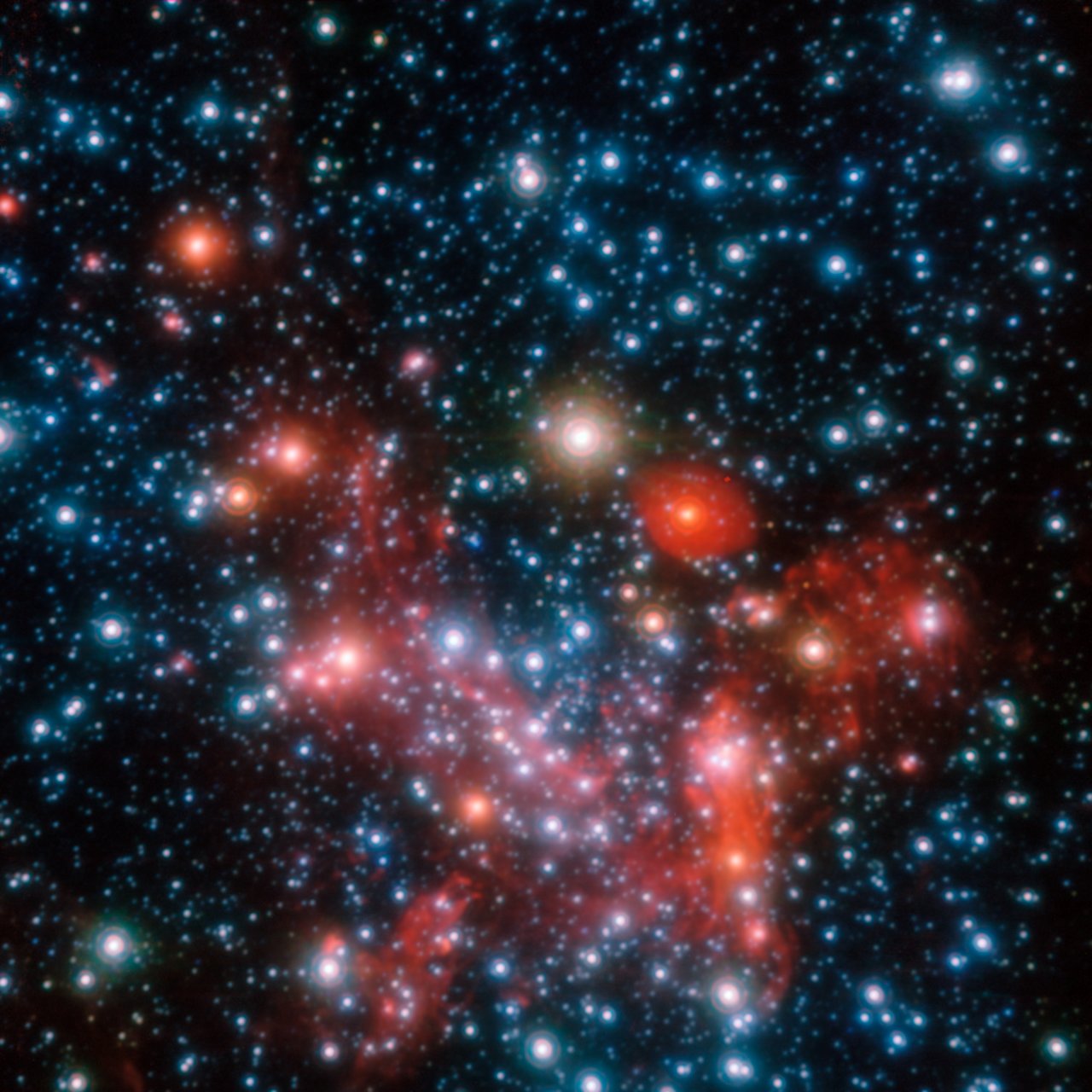
I really LOVE the fact that science discovers something, then has to change its viewpoint. I keep getting excited at what might be found next! Way back in 2008 we had this:
eso0846 — Science Release
Unprecedented 16-Year Long Study Tracks Stars Orbiting Milky Way Black Hole
10 December 2008
In a 16-year long study, using several of
ESO's flagship telescopes, a team of German astronomers has produced
the most detailed view ever of the surroundings of the monster lurking
at our Galaxy's heart — a supermassive black hole. The research has
unravelled the hidden secrets of this tumultuous region by mapping the
orbits of almost 30 stars, a five-fold increase over previous studies.
One of the stars has now completed a full orbit around the black hole.
By watching the motions of 28 stars orbiting the Milky Way's most
central region with admirable patience and amazing precision,
astronomers have been able to study the supermassive black hole lurking
there. It is known as "Sagittarius A*" (pronounced "Sagittarius A
star"). The new research marks the first time that the orbits of so many
of these central stars have been calculated precisely and reveals
information about the enigmatic formation of these stars — and about the
black hole to which they are bound.
"
The centre of the Galaxy is a unique laboratory where we can
study the fundamental processes of strong gravity, stellar dynamics and
star formation that are of great relevance to all other galactic nuclei,
with a level of detail that will never be possible beyond our Galaxy,"
explains Reinhard Genzel, leader of the team from the
Max-Planck-Institute for Extraterrestrial Physics in Garching near
Munich.
The interstellar dust that fills the Galaxy blocks our direct view of
the Milky Way's central region in visible light. So astronomers used
infrared wavelengths that can penetrate the dust to probe the region.
While this is a technological challenge, it is well worth the effort. "
The
Galactic Centre harbours the closest supermassive black hole known.
Hence, it is the best place to study black holes in detail," argues the study's first author, Stefan Gillessen.
The team used the central stars as "test particles" by watching how
they move around Sagittarius A*. Just as leaves caught in a wintry gust
reveal a complex web of air currents, so does tracking the central stars
show the nexus of forces at work at the Galactic Centre. These
observations can then be used to infer important properties of the black
hole itself, such as its mass and distance. The new study also showed
that at least 95% of the mass sensed by the stars has to be in the black
hole. There is thus little room left for other dark matter.
"
Undoubtedly the most spectacular aspect of our long term study
is that it has delivered what is now considered to be the best empirical
evidence that supermassive black holes do really exist. The stellar
orbits in the Galactic Centre show that the central mass concentration
of four million solar masses must be a black hole, beyond any reasonable
doubt," says Genzel. The observations also allow astronomers to
pinpoint our distance to the centre of the Galaxy with great precision,
which is now measured to be 27 000 light-years.
To build this unparalleled picture of the Milky Way's heart and
calculate the orbits of the individual stars the team had to study the
stars there for many years. These latest groundbreaking results
therefore represent 16 years of dedicated work, which started with
observations made in 1992 with the SHARP camera attached to ESO's
3.5-metre New Technology Telescope located at the La Silla observatory
in Chile. More observations have subsequently been made since 2002 using
two instruments mounted on ESO's 8.2 m Very Large Telescope (VLT). A
total of roughly 50 nights of observing time with ESO telescopes, over
the 16 years, has been used to complete this incredible set of
observations.
The new work improved the accuracy by which the astronomers can
measure the positions of the stars by a factor of six compared to
previous studies. The final precision is 300 microarcseconds, equivalent
at seeing a one euro coin from a distance of roughly 10 000 km.
For the first time the number of known stellar orbits is now large enough to look for common properties among them. "
The
stars in the innermost region are in random orbits, like a swarm of
bees," says Gillessen. "However, further out, six of the 28 stars orbit
the black hole in a disc. In this respect the new study has also
confirmed explicitly earlier work in which the disc had been found, but
only in a statistical sense. Ordered motion outside the central
light-month, randomly oriented orbits inside – that's how the dynamics
of the young stars in the Galactic Centre are best described."
One particular star, known as S2, orbits the Milky Way's centre so
fast that it completed one full revolution within the 16-year period of
the study. Observing one complete orbit of S2 has been a crucial
contribution to the high accuracy reached and to understanding this
region. Yet the mystery still remains as to how these young stars came
to be in the orbits they are observed to be in today. They are much too
young to have migrated far, but it seems even more improbable that they
formed in their current orbits where the tidal forces of the black hole
act. Excitingly, future observations are already being planned to test
several theoretical models that try to solve this riddle.
"
ESO still has much to look forward to," says Genzel. "For future
studies in the immediate vicinity of the black hole, we need higher
angular resolution than is presently possible." According to Frank
Eisenhauer, principal investigator of the next generation instrument
GRAVITY, ESO will soon be able to obtain that much needed resolution. "
The
next major advance will be to combine the light from the four 8.2-metre
VLT unit telescopes – a technique known as interferometry. This will
improve the accuracy of the observations by a factor 10 to 100 over what
is currently possible. This combination has the potential to directly
test Einstein's general relativity in the presently unexplored region
close to a black hole."
Notes
These observations are the culmination of 16 years of a
large monitoring campaign, begun in 1992 at ESO's New Technology
Telescope with SHARP. It was then pursued at ESO's Very Large Telescope
with the NACO and SINFONI instruments. These two instruments rely on the
use of adaptive optics, which allows astronomers to remove the blurring
effect of the atmosphere. As the centre of the Milky Way is very
crowded, it is necessary to observe it with the finest resolution
possible, hence, the need for adaptive optics.
Only radio signals, infrared light and X-rays can reach us from the
Galactic Centre. While radio observations show mostly gas and X-ray
observatories are sensitive to high energy processes, the infrared
allows these stars to be observed.
More information
S. Gillessen et al., Monitoring stellar
orbits around the Massive Black Hole in the Galactic Center, 2008,
Astrophysical Journal, in press.
Link to the article.
The team is composed of Stefan Gillessen, Frank Eisenhauer, Sascha
Trippe, Reinhard Genzel, Thomas Ott (MPE, Garching, Germany), Tal
Alexander (Weizmann Institute of Science, Israel), and Fabrice Martins
(GRAAL-CNRS, University of Montpellier, France).
Reinhard Genzel was awarded the prestigious Shaw Prize in Astronomy for 2008 for this research (see ESO Press Release eso0818).
The research team maintains a
web page on this project.
_______________________________________________________________
But this year came this:
A band of special, young stars has been discovered near the heart of the Milky Way
JESSICA ORWIG, BUSINESS INSIDER
28 OCT 2015
The Universe is a mysterious place – comprised of mostly dark matter
and dark energy, neither of which scientists fully understand. And now, a
recent study shows that even our own cosmic neighbourhood can surprise
us at times.
Reporting in this month’s
Astrophysical Journal Letters,
a team of astronomers identified a band of special, young stars
residing in one of the last spots they expected: near the heart of the
Milky Way.
The remarkable discovery suggests that some unknown force is breathing new life into our galaxy’s centre.
Before the team’s report, astronomers thought the Milky Way’s
centre, also called the galactic bulge, contained mostly old stars,
which have been around for billions and tens of billions of years. The
team’s discovery has uncovered a completely new component of our galaxy.
By analysing nearly four years of observations done between 2010
and 2014 with the VISTA Telescope at the Paranal Observatory in Chile,
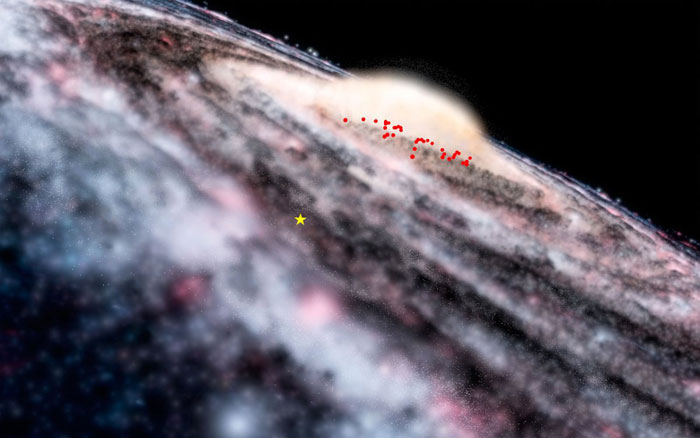
the team discovered a band of 35 extremely young stars.
In the image below, the red dots represent the Cepheids, while the yellow star identifies our Sun:
 Credit: ESO/Microsoft WorldWide Telescope
These stars are of a particular class called Cepheids, which are
famous for their pulsations that astronomers use to calculate extremely
accurate distance between Earth and the star.
Each Cepheid has a unique pattern where it brightens, dims, and
then repeats the cycle. Some Cepheids take days to complete a single
cycle while others can take months.
“All of the 35 classical Cepheids discovered are less than 100
million years old,” Dante Minniti, who is a co-author of the paper and
researcher at the University Andres Bello, Santiago, Chile, said in a
European Space Agency
press release. “The youngest Cepheid may even be only around 25 million years old.”
 Credit: ESO
For comparison, the Sun, which is in the prime stages of its
life, is roughly 4.5 billion years old – 180 times older than the
youngest Cepheid of this newly discovered group.
The team’s find “implies a continuous supply of newly formed
stars in the central region of the Galaxy over the last 100 million
years,” they stated in their paper.
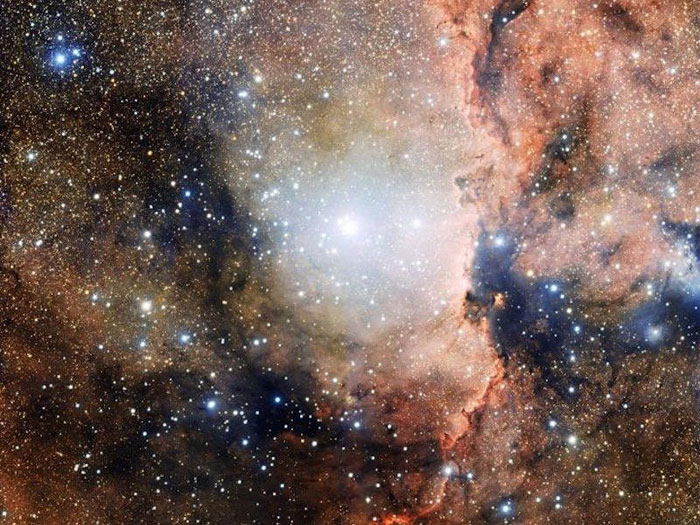
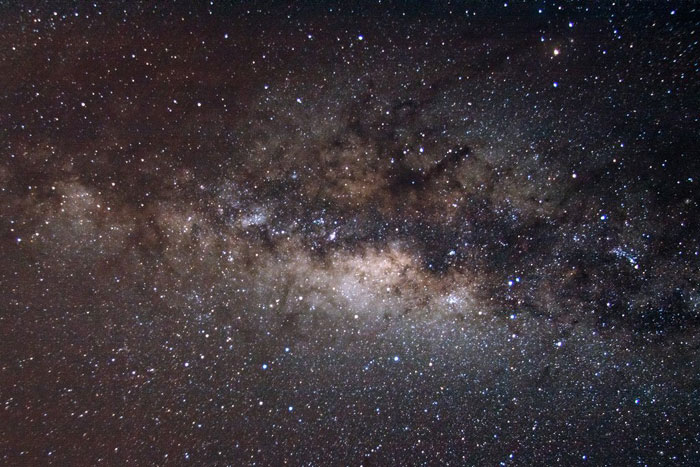
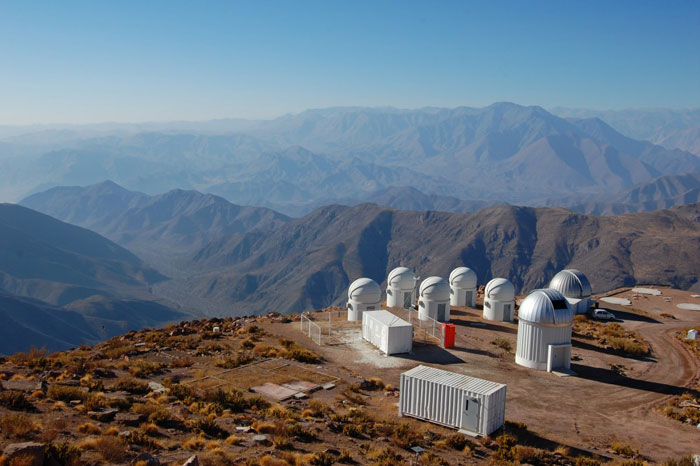
The VISTA telescope is a powerful instrument for mapping the heart of our Milky Way galaxy, which is hidden from the human eye.
 Credit: Dave Young/Flickr
If you look toward the galactic bulge (shown above), you’ll
notice that it is shrouded by dark, molecular clouds, which obstruct our
view of what lies beyond.
But with VISTA, astronomers can see through the clouds as if they
weren’t even there because it observes not in visible wavelengths (what
humans see) but in the infrared.
Infrared radiation is not absorbed by the molecular clouds in the
galactic bulge and instead passes straight through. Some of it
eventually reaches Earth.
For this reason, the team has been using VISTA to map the Milky
Way’s centre by seeking out Cepheid stars that lie beyond the molecular
clouds. They call their project the VVV Survey.
 Credit: Ashley P
Right now, our distance to the galactic bulge is uncertain. By
using the pulsating nature of Cepheids, astronomers can get a better
handle on this distance and eventually produce a three-dimensional map
of the Milky Way’s centre.
In their latest analysis of the data VISTA has collected so far,
the team identified 655 Cepheids. And when they looked at how quickly
each star was pulsating, which is related to the star’s age, they were
surprised to discover that 35 of their Cepheids were unusually young.
“This part of the galaxy was completely unknown until our VVV survey found it!” Minniti said.
The next step is to determine if these young stars formed where
astronomers see them today, or if they migrated toward the centre from a
more distant region of space.
Finding the answer will undoubtedly improve our understanding
about the past and future of our galaxy as well as other galaxies like
it throughout the Universe.
This article was originally published by Business Insider.