Total Pageviews

Friday, 15 January 2016

Humans visited Arctic earlier than thought

More "Lost History" being unearthed and I love this. We learn how resilient and adventuring Humankind was and what have we come down to in the comments on Science News' article?

" Or, maybe this was one of the earliest known UFO cattle mutilations? Check for surgical excision of the lips and anus."

It makes one so proud.  

Anyway, always remember what I keep saying/writing: We do NOT know the full history of Humankind nor its various "failed" off-shoots so keep on expecting more discoveries!

Humans visited Arctic earlier than thought

Weapon marks found on mammoth bones dating to 45,000 years ago

mammoth bones
EARLY ARCTIC HUNTERS  Mammoth remains (left) dating to 45,000 years ago and found in Arctic Siberia show signs of hunting injuries (right) premortem (red arrows) and postmortem (blue arrows). The discovery puts humans in the Arctic earlier than previously thought.

A frozen mammoth carcass in Siberia hints that humans roamed the Arctic earlier than researchers had thought.

Cuts and scrapes on the mammoth’s bones came from human hunting weapons. And dating of the bones puts humans well north of the Arctic Circle 45,000 years ago, scientists report in the Jan. 15 Science. Researchers had assumed that humans didn’t reach the Arctic until between 30,000 and 35,000 years ago.

The find shows that humans worked out how to cope with the Arctic’s extreme cold and sunless winters much earlier than experts thought, says Robin Dennell, a paleoanthropologist at the University of Sheffield in England who wasn’t involved in the work.

At 66.32° N latitude, the Arctic Circle skims the top of Canada and Russia.

FATAL THROW A gash on one of the mammoth’s rib bones likely came from a hunting spear and caused a lethal injury. 
V. Pitulko et al/Science 2016
 
 
Except for one site in eastern Siberia, also reported by the team in the new paper, other far-north archaeological sites 40,000 years or older sit around 55° N, just south of the Arctic Circle.
 
“The mammoth is almost 72° North,” says paper coauthor Vladimir Pitulko, an archaeologist at the Institute for the History of Material Culture of the Russian Academy of Sciences in St. Petersburg. That’s a huge latitudinal difference between the old human habitation sites south of the Arctic Circle and the new mammoth find well north of it — about 1,700 kilometers, he says.

The team pulled the mammoth, a 15-year-old male, from a frozen coastal bluff in the central Siberian Arctic. Carbon dating of the surrounding sediment and of a leg bone pinned the mammoth’s age at 45,000 years old.

Marks on one of the animal’s tusks and slices on many of its bones were similar to patterns on mammoth bones from a younger Siberian archaeological site where humans hunted mammoths, the researchers found. Human weapons such as spears probably caused the damage that killed the mammoth.

Humans entering the Arctic by 45,000 years ago is “a mighty, impressive achievement,” Dennell says. “What we don't know is whether this was a successful long-term adaptation or a short-lived heroic failure.”

Wednesday, 13 January 2016

The Red Paper: Canids Was NOT Meant To Earn ME Money.

Someone, who really has no idea and knows NOTHING about me, said that maybe my book Red Paper: Canids was a disappointment to me because it never made me any money?

Firstly, there is over 40 years of research in the book so it does NOT disappoint me.

Make ME money? That was never the intention. Any profits were to go to the UK Wolf Conservation Trust which does a LOT of educational work including with schools and The National Fox Welfare Society who do things like give advice on sick or injured foxes and FREE mange treatment.

 I am only disappointed (almost ashamed really) in that I have been unable to contribute to these two organisations.


The Red Paper:CANINES vol.1
 Terry Hooper
The Red Paper: Canids
Paperback, 
A4 (21 x 30cms)
202 Pages 
Photographs, illustrations and maps
Price: £10.29
Ships in 3–5 business days


By the 1700s the British fox was on the verge of extinction and about to follow the bear and wolf having been hunted for sport for centuries. 
 
The answer was to import thousands of foxes per year for sport. But foxes kept dying out so jackals were tried. Some were caught, some escaped. Even wolves and coyote were released for hunting and "country folk" were very far from "happy" -some even threatening local hunts -one intending to release a wolf for a hunt- with legal and other consequences.
 
The summation of over 40 years research by the noted naturalist and former UK police forces exotic wildlife consultant reveals the damnable lie of "pest control" hunting but also reveals the cruelty the animals were subject to and how private menageries as well as travelling shows.
 
Private menageries, or single exotic "pets" as well as travelling shows helped provide the British and Irish countryside with some incredible events such as the 1905 "vampiric" sheep killer of Badminton, the mystery hounds of Cavan and Coyotes of Epping Forest. 
 
The Girt Dog of Ennerdale is also dealt with in detail -was it a tiger? A Tasmania Thylacine? This book gives the exact facts and details for the first time.

Up-dated 2013 edition includes a section on sarcoptic mange in foxes and treatment plus a list of wildlife sanctuaries and rescue centres in the UK.

http://www.lulu.com/shop/terry-hooper/the-red-papercanines-vol1/paperback/product-20492038.html

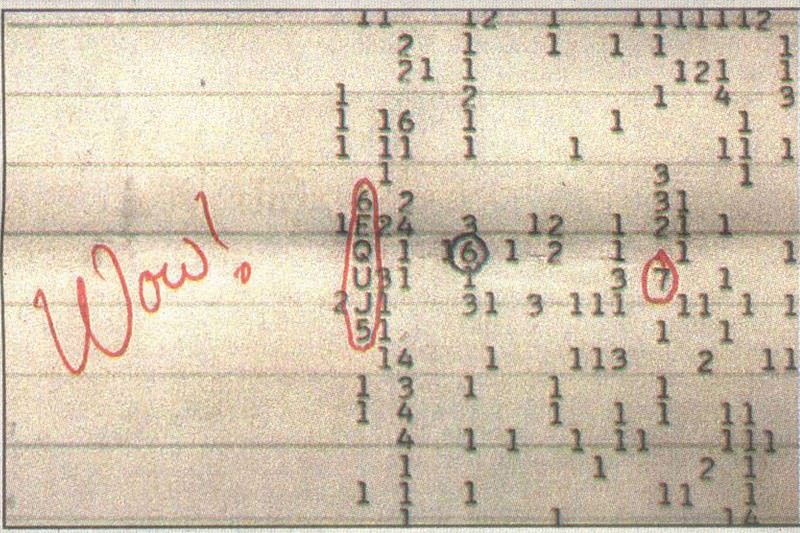
"Wow!" Signal -Just Hydrogen?

Famous Wow! signal  might have been from comets, not aliens


I have to say that if -IF- a natural cause for the Wow! Signal was found it might seem sad but, again, you have to dismiss the false data to get to the True data.

A lot of Signals from Space that the AOP Bureau under Franklyn Angus Davin-Wilson looked into did have natural causes because planetary noise, pulsars and so on were not known at the time.  However, I have to agree that I am doubtful because of the hydrogen factor.  I can't see this being correct but....


https://www.newscientist.com/article/dn28747-famous-wow-signal-might-have-been-from-comets-not-aliens/?utm_source=NSNS&utm_medium=SOC&utm_campaign=hoot&cmpid=SOC|NSNS|2016-GLOBAL-twitter

Famous Wow! signal might have been from comets, not aliens

On 15 August 1977, radio astronomers using the Big Ear radio telescope at Ohio State University picked up a powerful signal from space. Some believe it was our first interception of an alien broadcast. Now it seems something closer to home may have been the source: a pair of passing comets.

The signal – known as the “Wow! signal” after a note scribbled by astronomer Jerry Ehman, who detected it – came through at 1420 megahertz, corresponding to a wavelength of 21 centimetres.

Searchers for extraterrestrial transmissions have long considered it an auspicious place to look, as it is one of the main frequencies at which atoms of hydrogen, the most common element in the universe, absorb and emit energy. What’s more, this frequency easily penetrates the atmosphere.

But in the 40 years since, we’ve never heard anything like it again. Analysis of the signal ruled out a satellite, and a reflected signal from the Earth’s surface is unlikely because regulations forbid transmission in that frequency range.

The signal’s intensity rose and fell over the course of 72 seconds, which is the length of time that the Big Ear could keep an object in its field of view due to the rotation of the Earth. That meant it was clearly coming from space. So what was it?

Antonio Paris, a professor of astronomy at St Petersburg College in Florida, thinks the signal might have come from one or more passing comets. He points the finger at two suspects, called 266P/Christensen and P/2008 Y2 (Gibbs). “I came across the idea when I was in my car driving and wondered if a planetary body, moving fast enough, could be the source,” he says.

Hydrogen clouds

Comets release a lot of hydrogen as they swing around the sun. This happens because ultraviolet light breaks up their frozen water, creating a cloud of the gas extending millions of kilometres out from the comet itself.


If the comets were passing in front of the Big Ear in 1977, they would have generated an apparently short-lived signal, as the telescope (now dismantled) had a fixed field of view. Searching that same area – as subsequent radio telescopes did – wouldn’t show anything. Tracing the comets’ positions back in time, Paris says that the possible origin for the Wow! signal falls right between where they would have been.

Neither comet was known in 1977; they were both discovered in the last decade, which would mean nobody would have thought to search for them. The odds of any telescope catching them in the region of the Wow! signal by chance were vanishingly small.

To test his idea, Paris proposes looking at the same region of space when the comets are back. Comet 266P/Christensen will transit the region first, on 25 January 2017, then P/2008 Y2 (Gibbs), on 7 January 2018. An analysis of the hydrogen signal of the comets should reveal if he is correct.

Doubts signalled

Some researchers are sceptical, saying it isn’t clear the comets would release enough hydrogen to generate something like the Wow! signal. James Bauer of the Jet Propulsion Laboratory in Pasadena, California, agrees that the hydrogen from comets can extend quite far, but still thinks the signal won’t be strong enough. “If comets were radio-bright at 21 centimetres, I would be puzzled as to why they aren’t observed more often at those wavelengths,” he says.

Paris says future observations will determine whether he is right. One crucial piece of evidence will be how fast the comets move across the sky. Too slow, and the Big Ear would have seen another signal 24 hours later as they rolled back into view, unlike the solo blast of the Wow! signal. “The hypothesis must be tested before it is ruled out,” he says. “Science 101.”


Journal reference: To appear in the Journal of the Washington Academy of Sciences, preprint
(Image credit: The Ohio State University Radio Observatory and the North American Astrophysical Observatory (NAAPO)


New Details on Ceres

Some great photos from NASA JPL. I'll say the bright spots are Cereseans with laser pointers!

New Details on Ceres Seen in Dawn Images

Kupalo Crater from LAMO
This image from NASA's Dawn spacecraft shows Kupalo Crater, one of the youngest craters on Ceres. Image Credit: NASA/JPL-Caltech/UCLA/MPS/DLR/IDA


Features on dwarf planet Ceres that piqued the interest of scientists throughout 2015 stand out in exquisite detail in the latest images from NASA's Dawn spacecraft, which recently reached its lowest-ever altitude at Ceres.

Dawn took these images near its current altitude of 240 miles (385 kilometers) from Ceres, between Dec. 19 and 23, 2015.

Kupalo Crater, one of the youngest craters on Ceres, shows off many fascinating attributes at the high image resolution of 120 feet (35 meters) per pixel. The crater has bright material exposed on its rim, which could be salts, and its flat floor likely formed from impact melt and debris. Researchers will be looking closely at whether this material is related to the "bright spots" of Occator Crater. Kupalo, which measures 16 miles (26 kilometers) across and is located at southern mid-latitudes, is named for the Slavic god of vegetation and harvest.

"This crater and its recently-formed deposits will be a prime target of study for the team as Dawn continues to explore Ceres in its final mapping phase," said Paul Schenk, a Dawn science team member at the Lunar and Planetary Institute, Houston.

Dawn's low vantage point also captured the dense network of fractures on the floor of 78-mile-wide (126-kilometer-wide) Dantu Crater. One of the youngest large craters on Earth's moon, called Tycho, has similar fractures. This cracking may have resulted from the cooling of impact melt, or when the crater floor was uplifted after the crater formed.

Guess what the bright spots are
A 20-mile (32-kilometer) crater west of Dantu is covered in steep slopes, called scarps, and ridges. These features likely formed when the crater partly collapsed during the formation process. The curvilinear nature of the scarps resembles those on the floor of Rheasilvia, the giant impact crater on protoplanet Vesta, which Dawn orbited from 2011 to 2012.

Dawn's other instruments also began studying Ceres intensively in mid-December. The visible and infrared mapping spectrometer is examining how various wavelengths of light are reflected by Ceres, which will help identify minerals present on its surface.

Dawn's gamma ray and neutron detector (GRaND) is also keeping scientists busy. Data from GRaND help researchers understand the abundances of elements in Ceres' surface, along with details of the dwarf planet's composition that hold important clues about how it evolved.

The spacecraft will remain at its current altitude for the rest of its mission, and indefinitely afterward. The end of the prime mission will be June 30, 2016.

"When we set sail for Ceres upon completing our Vesta exploration, we expected to be surprised by what we found on our next stop. Ceres did not disappoint," said Chris Russell, principal investigator for the Dawn mission, based at the University of California, Los Angeles. "Everywhere we look in these new low- altitude observations, we see amazing landforms that speak to the unique character of this most amazing world."

Dawn is the first mission to visit a dwarf planet, and the first mission outside the Earth-moon system to orbit two distinct solar system targets. After orbiting Vesta for 14 months in 2011 and 2012, it arrived at Ceres on March 6, 2015.

Dawn's mission is managed by the Jet Propulsion Laboratory for NASA's Science Mission Directorate in Washington. Dawn is a project of the directorate's Discovery Program, managed by NASA's Marshall Space Flight Center in Huntsville, Alabama. UCLA is responsible for overall Dawn mission science. Orbital ATK Inc., in Dulles, Virginia, designed and built the spacecraft. The German Aerospace Center, Max Planck Institute for Solar System Research, Italian Space Agency and Italian National Astrophysical Institute are international partners on the mission team. For a complete list of mission participants, visit:


http://dawn.jpl.nasa.gov/mission
More information about Dawn is available at the following sites:
http://dawn.jpl.nasa.gov
http://www.nasa.gov/dawn

Monday, 11 January 2016

Whatever Happened To Phenix Adams?

The one thing you find while trawling through newspaper archives are stories that have absolutely nothing to do with what you are looking for.  However, these stories pique your curiosity and they are little windows into the past that you would never normally get a chance to look through.

There are, of course, reports of murders, great cruelty to other humans but also -sadly- to animals simply because they are animals and what better way to have 'sport' and 'fun' than running down a badger or feeding hedgehogs poison to see whether it is true that none affect them.

Then you have cases like that of Phenix Adams.

Phenix Adams was a Private in the First Somerset Militia and, as you'll read below, sought medical aid for an ulcerated wound in the arm.  Help was denied and Phenix deserted but was caught but while in gaol another wound appeared on his leg.  All self inflicted or "occasioned by his own contrivance".  But then he fell down some stairs and blood poured from his ears.

After that, Adams slipped into a coma -at first the only conclusion the doctors could make was "fakery".  They tried all the tricks but it appears Adams was not faking. The last written about Adams was that  "The man now remains in the same state of mental insensibility."

That was it.  I can trace no more of Adams. Was he really causing problems by tampering with an old wound?  Then self-inflicting a new wound?  And the "fall" -did he pass out and you cannot really fake blood coming from your ears -a self inflicted cut in either ear wouldn't go unnoticed, especially if blood was "pouring out" and then the gradual slip into a coma -and it seems the doctors tried every trick to prove a hoax or medicate him.

First thing I thought was  hemorrhagic fever of some kind?  Without being able to find and read the notes of the doctors at the time we will never know.  Phenix Adams was declared a faker, deserter and genuine medical mystery all in one newspaper column.

The Taunton Courier for 1811 lists:

1811 18Jul Adams Phenis - private 1st Somerset Regiment wound

So, we're not even sure whether the name is "Phenis" or "Phenix"...here is the originalo item picked up and published by The  Liverpool Mercury, 16th August, 1811

Now,once I get the whiff of a puzzle or mystery I stick with it.  After all, I doubt I can afford 30-40 years to solve cases at my age!

So I dug and dug and then succeeded -don't ask how because one mention leads to nothing which then...you get the point? Somerset and Dorset Notes & Queries Volume 12 - Page 339:

A Somerset Militia Man - From "The Times" of Saturday, Sept 14, 1811.
"Our readers will recollect a statement respecting a soldier of the First Somersetshire Militia, who had lain in a very surprising state of insensibility from the 26th of April, in the present year, down to the 18th of July. Various means had been resorted to for the purpose of ascertaining whether the illness was real, such as thrusting snuff up his nostrils, administering nitrous oxide gas, electrical shocks, powerful medicines, etc, all of which proved utterly unavailing in the attempt to arouse him from the unaccountable torpor in which he had laid so long ; nor, indeed, did any of these expediants produce in him the slightest symptoms of animation.

We have now to add to this account a few facts, which, for there singularity, may challenge competition with the most marvellous occurrence that ever reached the public notice.

A few days after our account appeared, Phineas ADAMS, the subject of this curious narrative, and whose age was no more than 'eighteen', on the 6th of June last, was removed from the goal in which he then was, to the parish of Bickenhall, a small village seven miles from Taunton. His parents residing at that place, but being unable to recieve him in there own habitation, Adams was lodged in the poor-house - a small cottage adjoining the churchyard. In this situation he continued to be without exhibiting the least evidence of an improving condition.

In this hopeless condition, he was visited by Mr. WELSH, surgeon of Taunton, who suggested the propriety of performing the operation of 'scalping' the patient, with a view to ascertain whether the fall, to which the illness was attributed, might not have produced a depression of the brain. The proposal was communicated to the parents of Adams, who expressed there willingness that the experiment should be made. Accordingly, at the time appointed, the surgeon accompanied Adams's father to the bedside of his son, and there, in the presence of several respectable persons, described to both the young man's parents the nature and precise course of operation about to be performed. The incisions were made, the scalp drawn up, and the head examined ; during all which time the young man manifested no audible sympton of pain, or sensibility of suffering whatever, until the application of an instrument, with which the head was scraped in a particular part, and then, and once only, he uttered a groan.

No beneficial result appearing from this experiment, and as his case seemed absolutely remediless, application was made to his regiment for his discharge.

On Tuesday, August 20, the discharge arrived, and was taken over to Bickenhall by the sergeant. On the Tuesday following, old Adams brought his son downstairs in his arms ; and on the 28th he again brought him down, the son still remaining insensible. Next night (the 29th) he was seen sitting in the poor-house, with a gun in his hand, conversing with his father ; and on Friday, the 30th (our readers will participate with us in the complete astonishment excited by the fact) he was at Mr PALMER's a farmer, two miles from Bickenhall, cutting spars, carrying reed up a ladder, and assisting his father in thatching a rick!

The extraordinary rapidity of this young man's recovery, after obtaining his discharge from his regiment, having excited, in combination with the other circumstances which we formerly stated, an opinion that imposition had been practised, some of the neighbours reported that a press-gang was coming for him. This, it is supposed, having reached his ears, he absconded, and not a syllable has been heard of him since. . . . " 

Was it possible -had Phineas Adams faked it all?  Eight days after the military discharge Phineas was still being carried downstairs by his father and was, supposedly, still insensible. What of the reed cutting and carrying?  Surely what the doctors were putting him through was worse than military life?

Whatever, this is a fascinating story and shows what I can get side-tracked with during a day. Damn but I can't ignore a mystery!

I hope Phineas Adams had a good life!


Light Infantry uniform plate: British Light Infantry by Bryan Fosten from Osprey's Men-at-Arms No.119

Sunday, 10 January 2016

"Had any British Bigfoot reports yet, then?"

I was asked, rather sarcastically, "Had any British Bigfoot reports yet, then?"

Well, the response to that question is a resounding "No".  Obviously the guarantee of confidentiality hasn't been much use as a couple people I contacted regarding photographs of broken tree limbs, "knocking sticks" and what they claim might be a wildman/bigfoot in the distance have refusede to respond.

Now, I made the publicly open offer to look at any material or evidence with an open mind and this should have encouraged the people who keep screaming that "science will not look at our evidence!" but they seem to failto understand that if you do not provide your evidence then science cannot examine it.

If I wanted to treat the subject fairly then I would need to use example photographs to make a point or a photo of a footprint and so on.  I cannot.  Why? Because every photo of a twisted, broken or damaged branch or tree, or location or a stick has a big "C" (copyright) on it.  I abide by the laws and rules of publishing as well as image use. 

I cannot have copies to use?  Can I be taken to the area in question? NO! "We/I've secured the site and am not revealing its location".....HOW do you "secure" common land?  And I am NOT allowed to know the location which is odd because my head contains some very special site locations that if I revealed them WOULD cause major problems for the wildlife involved.  Information and locations from police, farmers, forest rangers and wardens and many others over 40 years.  But I cannot be told the location of a broken tree branch?

In fact, reading one account of "sounds" has told me that a certain animal only a very few people know about is still there and doing well -the location is spot on, too.  So, in a way, this has had some interesting results for me.

The lack of any cooperation of "British Wildman" people speaks volumes.  However, I am still determined to read or look at any evidence but the 31st January deadline still remains.  After that I base my report on what I have seen so far and I doubt in the future  any other naturalist will be anywhere as willing as I am to look at evidence.

Friday, 8 January 2016

Pursuing The Strange & Weird:A Naturalists Viewpoint


Pursuing The Strange & Weird:A Naturalists Viewpoint


Terry Hooper-Scharf
Paperback, 
A4
249 Pages
Highly illustrated
Price: £15.00
2013 UP DATE -From Dead Aquatic (Humanoid) Creatures, the giant squid and yet undiscovered sea creatures; submarine and ships crews encountering true leviathans.

There is a fully expanded section which also refers to the so-called ‘Ningen’ sightings and video footage. 
Extinct animals at sea that have been re-discovered. The subject of Sasquatch and other mystery Hominids around the world is dealt with including a look at the “Sasquatch-killer”, Justin Smeja.

Dr. Bryan Sykes and his DNA test results for TVs The Bigfoot Files as well as the controversial Erickson Project and Dr. Melba Ketchum’s Even more controversial Sasquatch DNA test results.

Also included are two early French UFO entity cases that still baffle. Ghosts, strange creatures and the Star-Child hoax. All dealt with by the naturalist and pursuer of the strange and weird