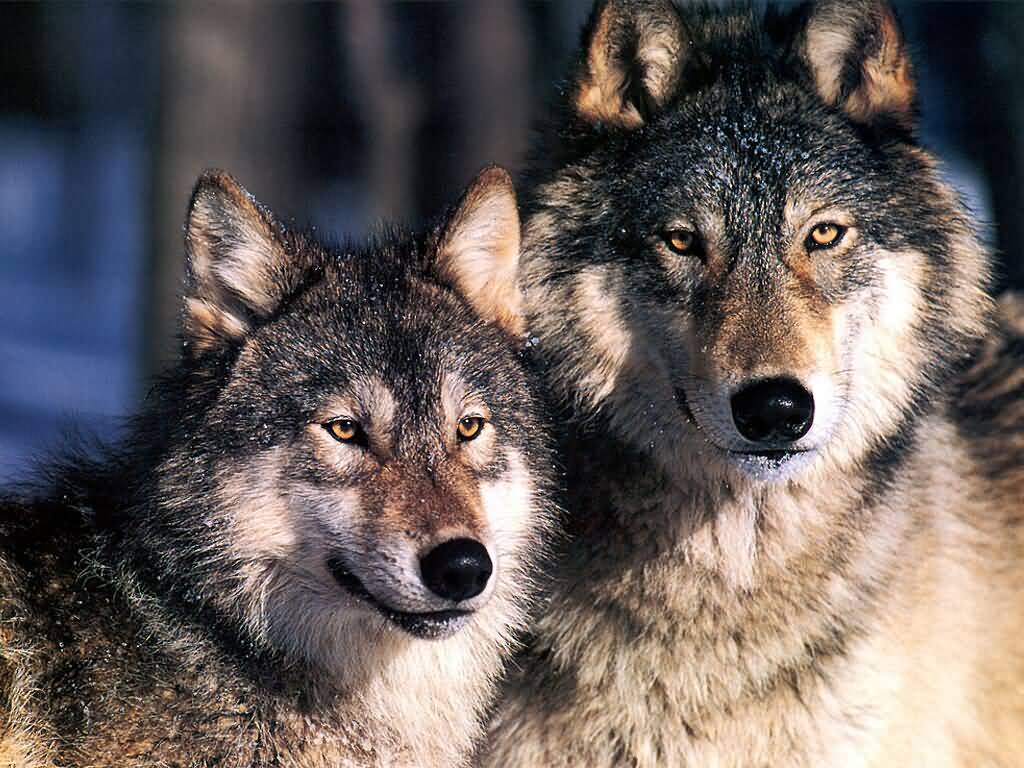
This from the Wolf Conservation Trust shows that European wolves are far from protected. A bunch of asses with money and lobbyists now get everything changed. Some
people want to be able to go out and kill 16 wolves. This means that 687.5 get to shoot one each of the 16 wolves.
So,that company in Norway: yes, I REALLY do need the money but I'm refusing until your country wakes up.
Norway is gearing up for a wolf hunt: 11,000 people have applied for
licenses to shoot one of 16 wolves in this season's quota. As the wolf
population is estimated at just 35 wolves, this means that roughly half
will be killed.
The hunt is the result of successful lobbying by
the hunting and farming communities in Norway. As Norway is outside of
the EU, rules such as the Habitat Directive don't apply.
Source:
https://news.vice.com/article/over-11000-norwegians-register-to-hunt-just-16-grey-wolves
This is from 2012 on the William Lynn site. It shows that wolf hunting is still "fun sport". My new resolution is that I will not travel to any country in Europe that allows wolf hunting. Moronic asses.

Norway
recently entered into negotiations with Sweden to claim a population of
Swedish wolves as their own. This is to protect the interests of
Norwegian wolves, right? Not at all. Norway wants to claim these wolves
who range into its northern reaches so that it may eliminate wolves in
the lower two thirds of the country.
In British Columbia, a draft plan to control wolf populations through
the renewal of a bounty system is being finalized. Does BC have an
overpopulation of wolves? Not at all.
Powerful agricultural and hunting
interests want to see them driven from much of the landscape.
The actions of Norway and British Columbia may seem shocking to some,
but they reflect an effort to end wolf recovery that was pioneered in
the United States over the last two decades. Here is how it works.
Opponents of wolves gerrymander maps to create the impression that
wolves have recolonized a broad geographical region. They then define
the endpoint of wolf recovery programs according to barely adequate
population numbers. Combine the two and you can quickly undermine
decades of hard fought battles to protect wolves and their habitats.
In 1995 Grey wolves were restored to Yellowstone National Park, and
the wolf population was steadily increasing in Minnesota. By the ten
year anniversary of the Yellowstone restoration, Wolf packs would had
spread throughout the Greater Yellowstone Region, as well as into
Wisconsin and Michigan.
Mexican wolves had a tenuous hold in a small
section of the Blue Ranges on the border of Arizona and New Mexico. Red
wolves were just beginning to recover in the Alligator River National
Wildlife Refuge, having recently been reintroduced after a captive
breeding program on Bulls Island, SC. Huge swaths of the country that
were once home to wolves and in desperate need of their ecological
services remained to be recolonized.
Yet in 2003 the Bush administration began a long-term effort to
downgrade the protection wolves had received under the Endangered
Species Act. They began by down listing the grey wolf from endangered to
threatened. Shortly thereafter they sought to return wolf management to
the states.
As part of this effort, the administration began gerrymandered zones
of wolf recovery based on political not ecological criteria. They did
this by lumping multiple areas suitable for wolf recovery into single
geographical regions. They then adopted a policy that once wolves were
recovered in one portion of a region, they were declared recovered
across the entire region. Recovery efforts elsewhere were regarded as
unnecessary.
For example, the Midwest and the Northeast were counted as a single
“Eastern” region by the Bush Administration. Because wolves were
established in Minnesota, Wisconsin and Michigan, wolves were considered
to be recovered everywhere in the east. All without a paw on the ground
in New England, New York, Pennsylvania, Ohio, Indiana, Illinois, Iowa,
Missouri, North Dakota, South Dakota, Nebraska, and Arkansas. The
ongoing discussions with the USFWS about recovering wolves in New
England (e.g. Adirondack Park, Allagash River Basin) ground to a halt.
Creating the false impression that wolves have recolonized a region
was not enough. Left to their own devices, wolves would continue to
expand their range as young males and females dispersed across the
landscape. So Bush’s Department of the Interior cooked up a simple
scheme. They defined a successful recovery as a minimal number of
breeding pairs. This was absurd. It vastly understated the normal size
of healthy wolf packs and populations, and ignored the biological
carrying capacity for wolves. As such, the criteria themselves put
sustainable wolf populations at extreme risk of accident, disease,
poaching, and predator control.
Yet the criteria also created the false impression that there was an
overpopulation of wolves since there were more wolves than envisioned by
artificially low population targets. This facade of overpopulation was
then used to justify public hunting and trapping of wolves, predator
control by Wildlife Services, and permissive rules for killing wolves
out of hunting season. The stated goals circulated around protecting
children, restoring threatened ungulate populations, and restoring
“balance” to natural systems. The actual intent was to devastate wolf
populations in the few places they have recovered, and restrict the
remnant populations to a gulag of habitats surround by free-fire zones.
Why would the federal and state governments want to do this? There
are many reasons including political hostility to animal and
environmental protection, and deeply rooted cultural antipathy towards
wolves.
Since Europeans first arrived in North America, they have seen
wolves of “beasts of waste and desolation” (President Teddy Roosevelt’s
phrase). Exterminating predators including wolves was a goal of federal
and state government for over a hundred years, and was only haltingly
ended in the 1970s.
Even now there are powerful voices both in and out
of government who do not believe that wolves have an ecological role or
ethical right to inhabit natural environments.
There are also financial interests at stake. Many ranchers expect the
federal government to pick up the tab for predator control. The irony
is that much of their stock grazes virtually for free on federal and
state lands. In addition, wolves kill a negligible number of cattle and
sheep in the US. The vast majority of stock die because of disease,
exposure, and poor range management.
Gig game hunting also has cards in the game. They want predator
suppression (of wolves, bears, coyotes, and pumas) to artificially
increase the numbers of deer, elk and moose. This allows them to
increase the number of hunting licenses sold, lining the pockets of
hunting guides and outfitters. Hunting tags also fund a large proportion
of state wildlife management budgets. Because of this, agencies charged
with ecological management are faced with perverse incentives to manage
for the largest budget, not a healthy landscape.
When Barack Obama won his first term as President, many in the wolf
community assumed he would end the anti-wolf policies of the previous
administration. Obama appointed Ken Salazar as Secretary of the
Interior. Salazar is a wealthy corporate rancher who is hostile to wolf
recovery. And so much to the surprise of many (including myself), the
Obama administration extended previous policies on wolf management.
Nevertheless, legal challenges stymied the full implementation of the Bush-Obama policies. Neither the feds or the states could
ever demonstrate that either the government’s wolf policies met the conditions required for recovery in the Endangered Species Act.
To overcome this legal barrier, the 2011 Congress attached a rider to
a budget bill that removed Grey wolves in the Rocky Mountains from the
endangered species list. Obama and Senate Democrats decided to throw
wolves under the bus to smooth the re-election of Senator John Tester
(Democrat, Montana), and Obama sighed the bill without objection. Wolves
were by an act of fiat no longer technically endangered. Wolf
management was quickly handed back to the states, where agricultural and
big game lobbies have historically manipulated wildlife management
agencies for their own interests. It surprised no one, then, that the
states prepared management plans modelled on the gerrymandering of maps
and deficient population levels that were pioneered by the federal
government.
This Fall saw wolves being hunted, wolf packs exterminated, and wolf
populations decimated across the US. Four decades of progress in wolf
recovery is coming to an end. Advocacy groups like Defenders of
Wildlife, the Sierra Club, and others are hurriedly reaching out to
their communities and decrying this injustice to wolves. But even as
their campaigns struggle to sound a moral note that would hold federal
and state wolf management account, it is far too little far too late.
Advocates for wolves were warned this would happen a decade ago. I
had been sounding this alarm since the late 1990s when I began to speak
widely on the ethics of wolf recovery. So too did scientists like David
Lavigne, Professor Emeritus of the University of Guelph and an expert on
values in environmental policy. He warned in a plenary address to the
World Wolf Congress of 2003 what would happen if the policy community
did not come to grips with the value-ladend dimensions of wolf
management. Those of us making this argument were concerned that we
would eventually lose the wolf wars if we did not complement the
scientific justification for wolves (which is strong) with robust
ethical arguments that advanced our moral responsibilities towards
wolves themselves. We implored citizens, scientists and policy makers to
reframe their arguments, to complement sound science with sound ethics,
to align facts with values, and in so doing create the conditions for
policy success.
Sadly, we were unsuccessful. The leadership of the mainline
environmental groups did not listen. They chose instead to curry
credibility with the very federal and state agencies that eventually
turned on them. And thus these organizations are reduced to making
emotive appeals hoping to shore up support for rearguard policy actions
that will do little to change the facts on the ground. We are, in some
senses, beginning wolf recovery in North America all over again.
It is Thanksgiving weekend in the States. I am deeply grateful for my
life. I have a loving home, good friends, and work I enjoy. Yet wolves
are dying in large numbers for senseless reasons right now. They will
continue to do so until there are few left to kill. This holiday season,
it seems that wolves have little to be thankful for.
Image: The photograph is from
Predator Nation,
a television show about “hunting the hunters” that airs on The
Sportsmans Channel and is hosted by Fred Eichler. Reflecting on killing
his first wolf, Eichler says in part,
"When we discovered the blood trail and found the wolf, I
was overjoyed and could barely contain my emotions. This is the first
time I took a wolf and I was ecstatic…. This was a day I will never
forget! Wolves are extremely smart and have my utmost respect. Managed
hunting helps to control populations to keep them from devastating game
populations."
"When we discovered the blood trail and found the wolf..." So, not even an outright kill shot the animal was wounded and in pain until it died. Remind me: which species did I say was the greatest vermin on the planet?